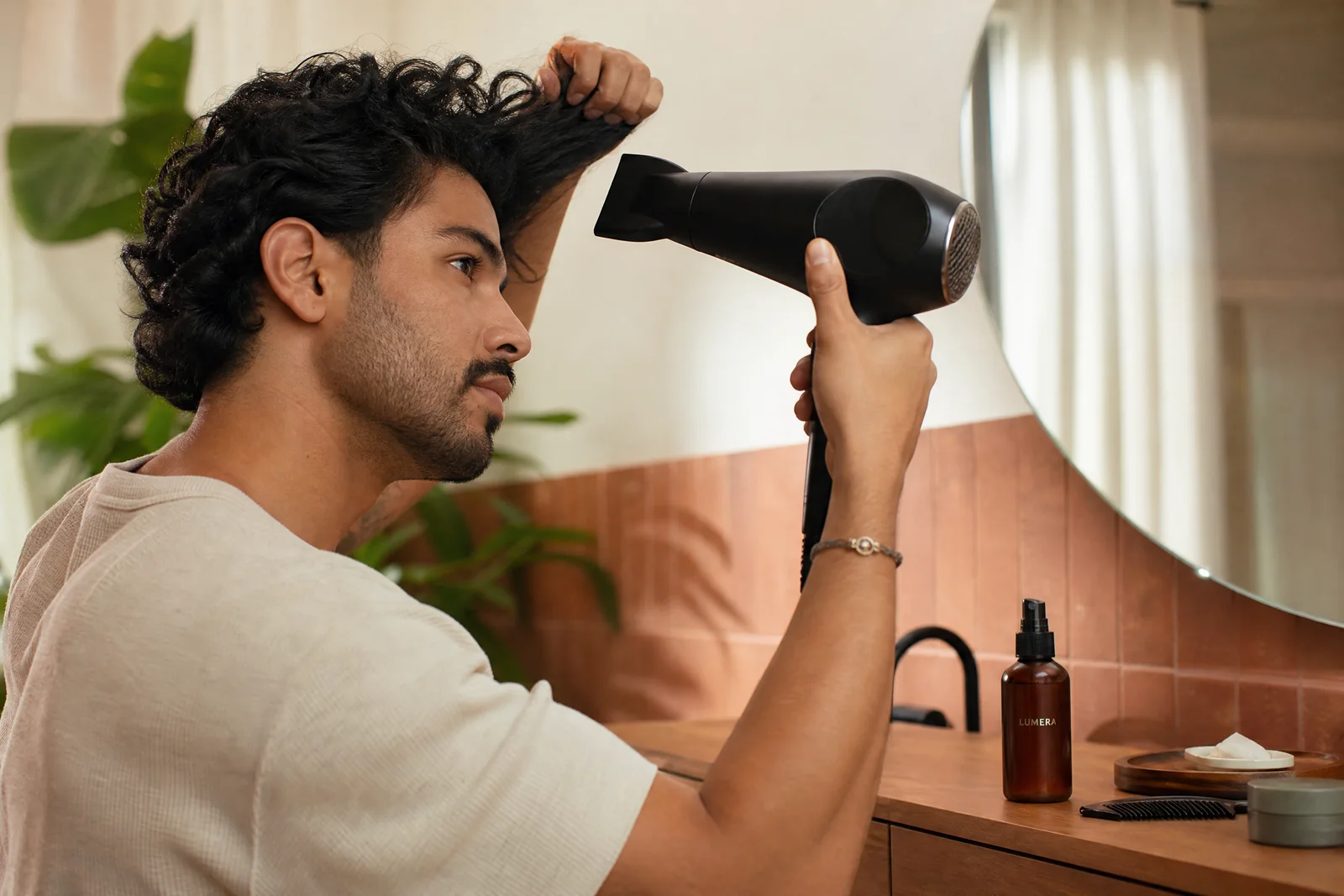
Heat styling is a trade-off, not an all-or-nothing decision. A blow-dryer, diffuser or iron can make a style easier to achieve, but repeated high heat can leave hair feeling rougher and less flexible. The most practical change is usually to reduce the intensity and frequency before buying a more elaborate tool.
Begin with less heat than you expect
Use the lowest temperature that creates the result you need. Fine, color-treated or already dry hair often benefits from a gentler setting and fewer passes. Allow hair to air-dry partway when possible, then use a dryer to finish the shape rather than starting from soaking wet hair.
Keep the air moving instead of holding a dryer on one section. If you use an iron, take smaller sections and move steadily rather than repeating several slow passes over the same strand.
Treat protectant as one part of a method
Heat-protectant products are designed to be used before styling, but they cannot make very high heat consequence-free. Apply the amount and placement directed on the label, distribute it evenly and let hair dry enough for the tool you are using.
The rest of the routine matters too: gentle detangling, a conditioner that works for your hair type and days without heated styling all lower the cumulative load.
Watch the pattern, not one day
Some roughness after a humid day or a new style is not automatically damage. Look for a repeated pattern of increased breakage, stubborn dryness or loss of manageability. If it appears, simplify the styling schedule and seek professional guidance for persistent concerns.
PRACTICAL NEXT STEP
Read the result over several wash days
Hair care is easier to judge in patterns than in a single wash. Notice the scalp, lengths and styling routine separately, then make one small change that has a clear reason.
Use this article to guide: heat protectant, blow dryer, styling tool.
- Decide whether the issue is scalp comfort, buildup, manageability or styling stress.
- Use the same wash pattern for several cycles before changing a second product.
- Apply cleanser to the scalp and conditioner where the lengths need it, unless directions say otherwise.
Before making a purchase or adding another step, decide what this change would replace. A smaller, clearer test is easier to evaluate than several new products used at once.
Revisit the decision after a few ordinary uses. Keep what is genuinely useful, simplify what is not, and let comfort and practicality carry more weight than a trend or a single swatch.
Keep the limit clear: Pain, persistent scaling, patchy shedding or a sudden density change are not problems a cosmetic routine should be expected to diagnose.
EXPLORE THE CONTEXT
Continue through the beauty archive.
Take the next useful route rather than treating one article as the end of the question.
Sources
- American Academy of Dermatology - Healthy hair tips
- U.S. Food and Drug Administration - Hair Products
Last reviewed Jun 20, 2025. This article is educational and does not replace medical advice.