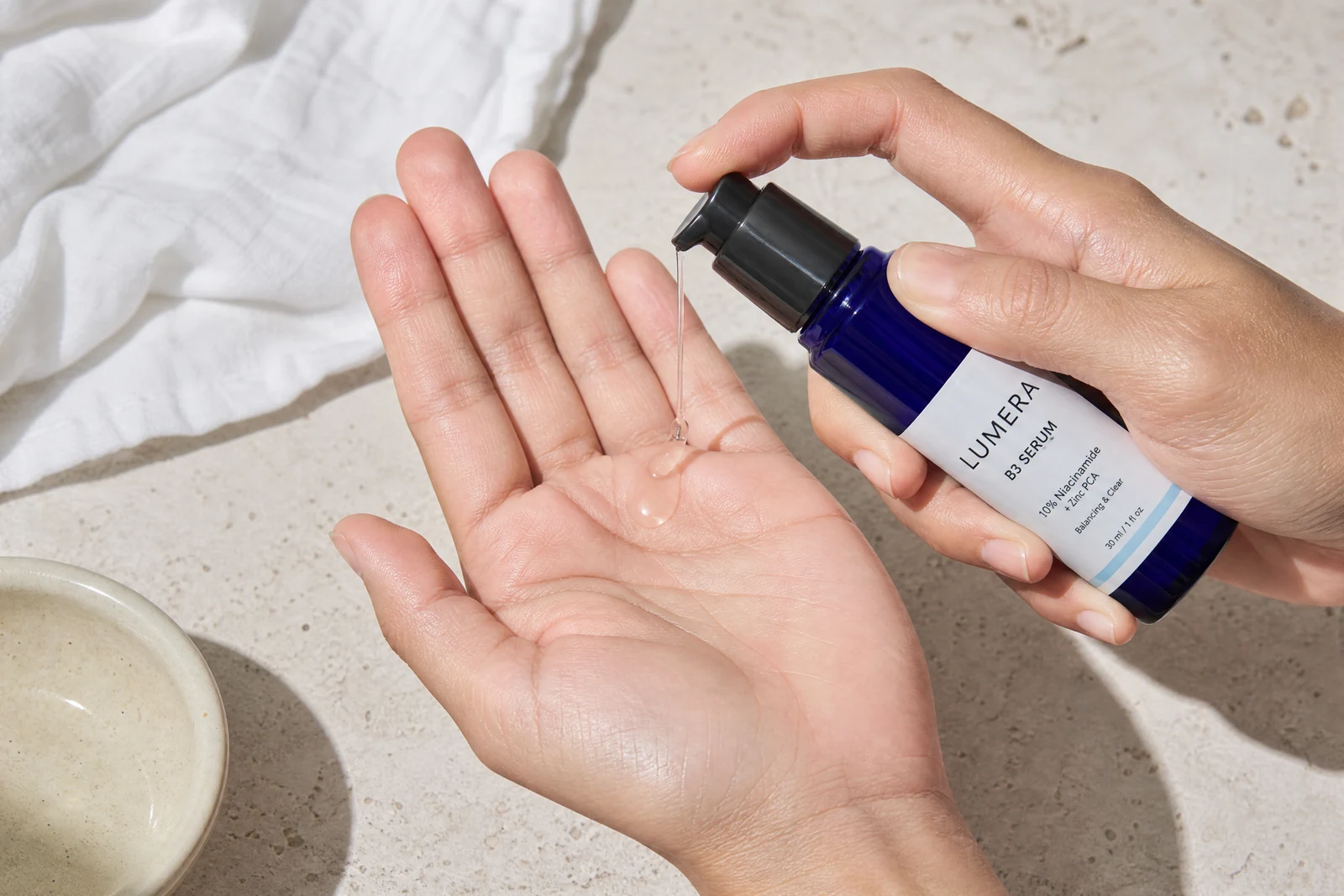
Niacinamide is a form of vitamin B3 used in serums, moisturizers and cleansers. Research supports several potential benefits, including barrier support, reduced water loss, a more even-looking tone and moderation of oiliness. The ingredient is versatile, which is why it appears in so many formulas.
More is not automatically more effective
Many published cosmetic studies use niacinamide around 2% to 5%. Products at 10% or higher are common, but the larger number does not guarantee a proportionally larger result. Higher-strength serums can sting, flush or feel tacky for some users.
Check whether niacinamide is already present in a moisturizer or sunscreen before adding a dedicated serum. A moderate amount across one formula may be easier than layering several high-percentage products.
Pairing is usually straightforward
Niacinamide can generally share a routine with vitamin C, retinoids, exfoliating acids and sunscreen. Old claims that niacinamide and vitamin C always deactivate each other do not reflect typical modern cosmetic use.
The practical issue is cumulative irritation. If a niacinamide serum also contains acids, zinc salts or multiple botanical extracts, judge the complete formula rather than assuming every reaction comes from vitamin B3.
A simple place to start
Use a moisturizer containing niacinamide once daily, or apply a dedicated 2% to 5% serum before moisturizer. Give the routine several weeks. If redness or itching persists, stop and reintroduce only after skin is comfortable.
Niacinamide is a supporting ingredient, not a replacement for acne medication, sun protection or an appropriate evaluation of persistent pigmentation.
PRACTICAL NEXT STEP
Test an ingredient in its real formula
An ingredient is only one part of a finished product. Format, concentration, supporting ingredients and how often you use it all affect the experience. Treat the guide as a way to frame a test, not as a promise about a single word on a label.
Use this article to guide: serum, moisturizer, uneven tone.
- Choose one product role, such as a treatment, moisturizer or cleanser.
- Introduce one new formula at a time and follow its directions.
- Note comfort, texture and visible changes before deciding whether to continue.
Before making a purchase or adding another step, decide what this change would replace. A smaller, clearer test is easier to evaluate than several new products used at once.
Revisit the decision after a few ordinary uses. Keep what is genuinely useful, simplify what is not, and let comfort and practicality carry more weight than a trend or a single swatch.
Keep the limit clear: A label cannot diagnose a skin condition or predict every reaction. Repeated irritation is a reason to stop, not to add more actives.
EXPLORE THE CONTEXT
Continue through the beauty archive.
Take the next useful route rather than treating one article as the end of the question.
Sources
- PubMed - Niacinamide containing moisturizer and facial appearance
- PubMed Central - Niacinamide mechanisms and topical use
Last reviewed Mar 7, 2025. This article is educational and does not replace medical advice.