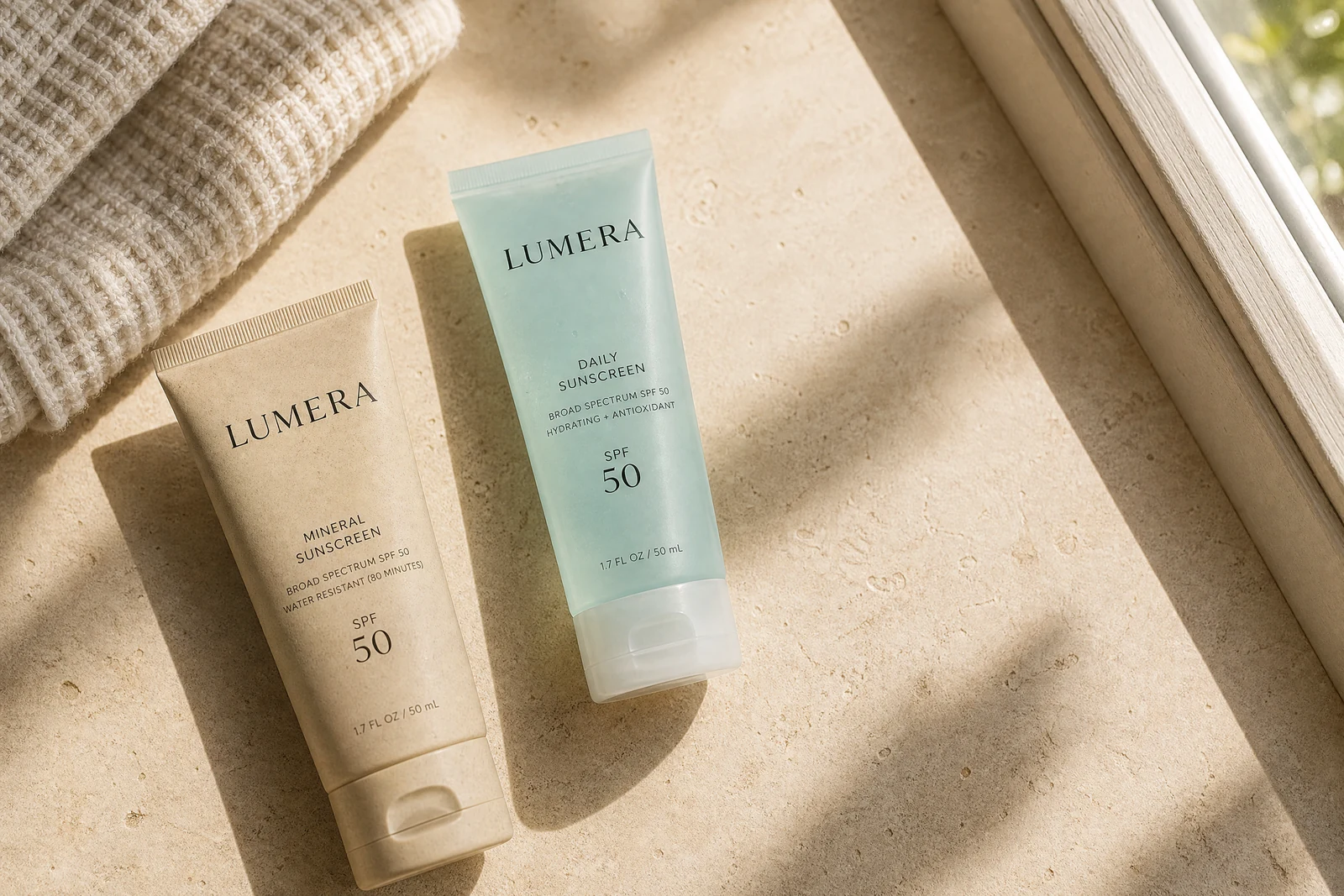
Protection comes first: broad spectrum, suitable SPF and water resistance when the situation requires it. Once those boxes are checked, texture and packaging determine whether the product becomes a routine or an abandoned bottle.
Match texture to the steps underneath
Fluid sunscreens spread quickly and can feel light, but the bottle may need shaking. Creams often support dry skin and can replace morning moisturizer. Gels may feel fresh on oily skin but can pill over several serums. Sticks are portable but require repeated passes and careful coverage.
Test the intended amount, not a tiny sample spread impossibly thin. Note eye sting, white cast, greasiness, tightness and how the film behaves after twenty minutes.
Finish is functional
A matte finish may control shine but emphasize flakes. A dewy finish may suit dry skin but feel heavy in humid weather. Tinted mineral products can reduce cast and may add visible-light protection when they contain iron oxides, though shade range is a real limitation.
Packaging questions
- Does the pump or nozzle dispense consistently?
- Is the bottle easy to shake when required?
- Can you see how much remains?
- Will the cap stay secure in a bag?
- Is the size realistic for generous daily use?
Airless packaging is useful for some unstable supporting ingredients, but it is not a substitute for sunscreen testing.
Build a reapplication plan
The same elegant morning fluid can work for reapplication, but a second portable product may be easier. Powders and mists can supplement a plan but are difficult to use as the only full, even layer.
Choose based on the most common day, then keep a water-resistant option for sport or swimming. One product does not have to solve every exposure scenario.
PRACTICAL NEXT STEP
Choose for your normal day
A product comparison is most useful when it begins with the setting where the product will actually be used. Think about application time, finish, reapplication, scent and what you are willing to carry or use again.
Use this article to guide: facial sunscreen, sun damage, photoaging.
- Write down one non-negotiable and one preference before browsing.
- Try the product with the layers and lighting you use most often.
- Assess comfort and usability after several normal uses, not one perfect swatch.
Before making a purchase or adding another step, decide what this change would replace. A smaller, clearer test is easier to evaluate than several new products used at once.
Revisit the decision after a few ordinary uses. Keep what is genuinely useful, simplify what is not, and let comfort and practicality carry more weight than a trend or a single swatch.
Keep the limit clear: Claims, packaging and ingredient lists are useful evidence, but they cannot replace individual tolerance or appropriate medical care.
EXPLORE THE CONTEXT
Continue through the beauty archive.
Take the next useful route rather than treating one article as the end of the question.
Sources
- American Academy of Dermatology - How to select sunscreen
- U.S. Food and Drug Administration - Sunscreen and sun protection
Last reviewed Mar 6, 2026. This article is educational and does not replace medical advice.