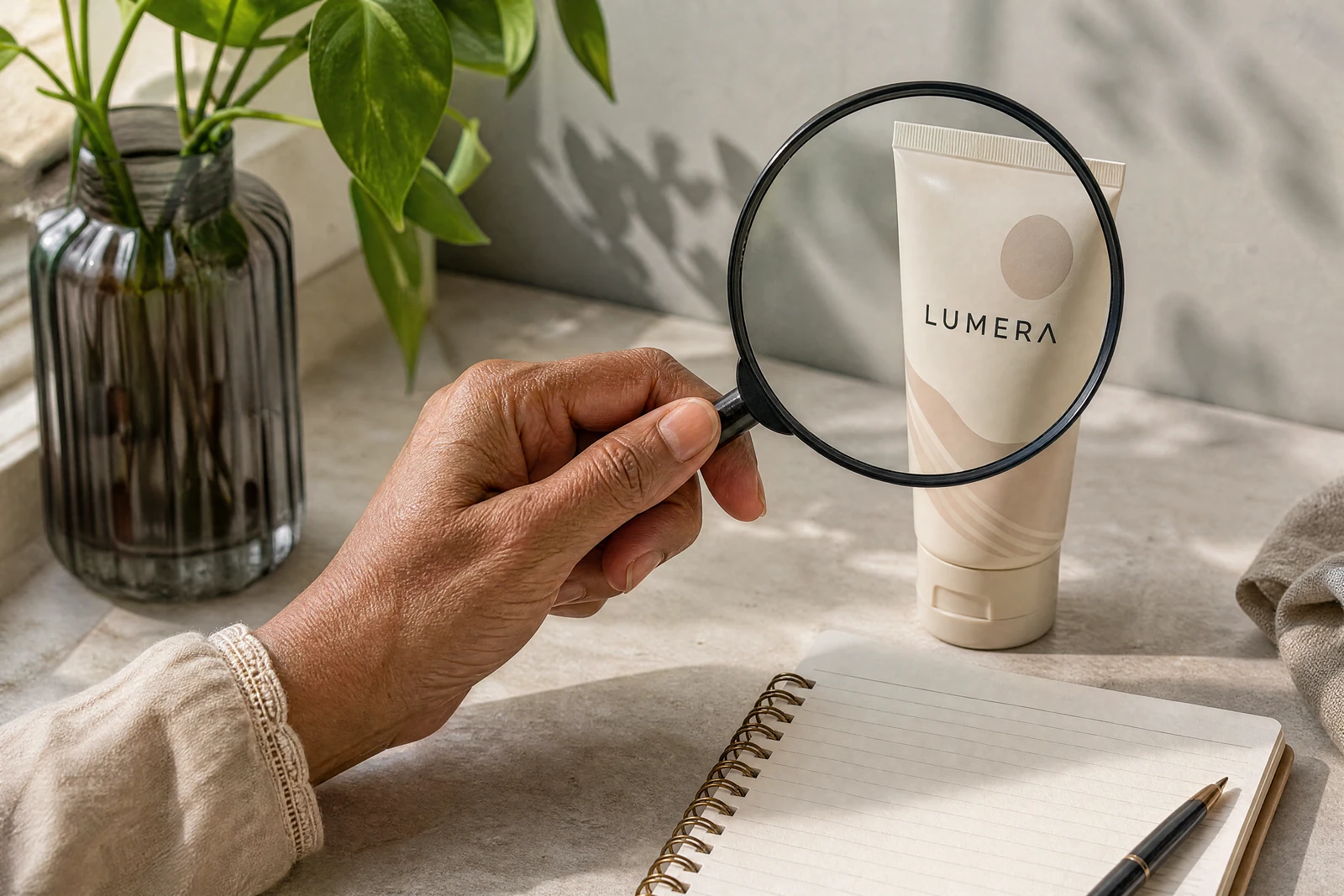
An ingredient list is useful evidence, but it is not a verdict on a product. It can tell you what a manufacturer chose to disclose and help you recognize ingredients you already know you avoid. It cannot tell you exactly how a formula will feel on your skin, how stable it is in use or whether it will solve a concern for you.
Use the list to ask a better question
Start with the product’s purpose. A cleanser, sunscreen, lipstick and leave-in conditioner are built to do different jobs, so the same ingredient can matter differently in each context. If you are comparing two products, look at the whole product type, directions and product claims before reducing the decision to a single familiar ingredient.
The list is especially helpful when you have a known sensitivity or are deciding whether a product contains a fragrance, color additive or other component you want to consider. It is less useful as a ranking system for words that happen to sound good or bad online.
Do not infer concentration from placement alone
Ingredient order can provide context, yet it does not disclose every formulation detail. Packaging, product format and how a formula is used can change what an ingredient means in practice. An ingredient list is one piece of a better decision, not a substitute for a product trial or medical guidance.
Keep a personal record
When a product works well or causes discomfort, note the product name, how you used it and what happened. That small record is usually more useful than chasing every ingredient trend. Stop using cosmetics that repeatedly irritate the skin and seek professional advice for persistent symptoms.
PRACTICAL NEXT STEP
Use the evidence without overreading it
Beauty information becomes more useful when you separate a product claim, a source and your own experience. That makes it easier to keep a promising idea in proportion without dismissing it automatically.
Use this article to guide: skin care, color cosmetics, hair care.
- Identify what the source actually supports and what remains an editorial judgment.
- Compare a claim with product directions, packaging and the relevant use case.
- Keep a short note when a product works well or repeatedly causes discomfort.
Before making a purchase or adding another step, decide what this change would replace. A smaller, clearer test is easier to evaluate than several new products used at once.
Revisit the decision after a few ordinary uses. Keep what is genuinely useful, simplify what is not, and let comfort and practicality carry more weight than a trend or a single swatch.
Keep the limit clear: Educational coverage can clarify a decision, but it cannot replace personal medical advice, a diagnosis or an individual safety assessment.
EXPLORE THE CONTEXT
Continue through the beauty archive.
Take the next useful route rather than treating one article as the end of the question.
Sources
- U.S. Food and Drug Administration - Cosmetics Labeling Guide
- U.S. Food and Drug Administration - Cosmetic Ingredients
Last reviewed May 23, 2025. This article is educational and does not replace medical advice.