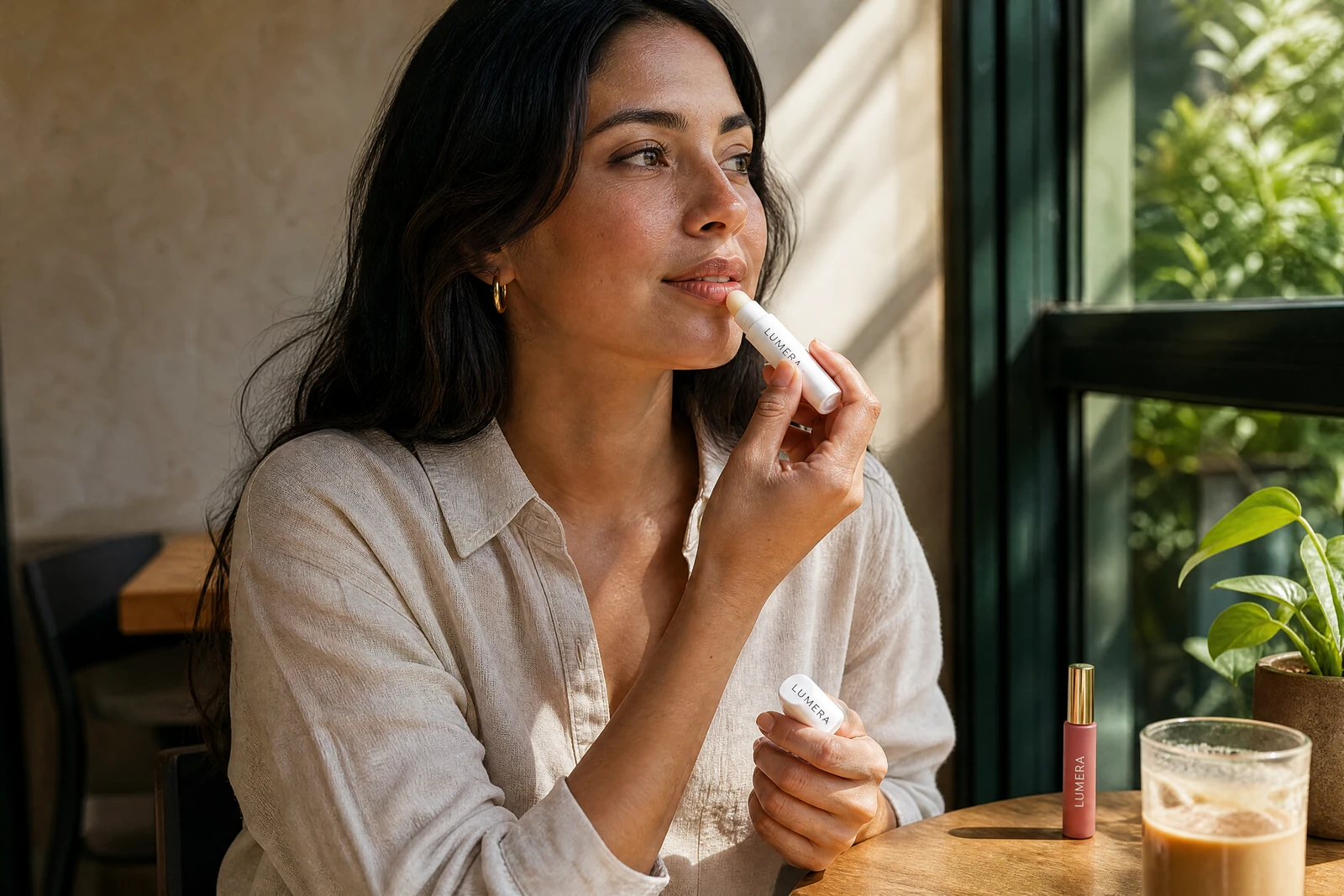
When lips feel dry, a product that looks good in a quick swatch may not be the one you want to reapply all day. Start by deciding whether comfort, color or longevity is the main job. A useful lip product is one you are willing to use again without making the rest of your routine feel more complicated.
Separate comfort from color
A balm or oil can be a simple choice when you want shine and a more cushioned feel. A tint can leave color behind with a lighter texture. Traditional lipstick can give more structure and pigment, but some finishes may feel less flexible over time. None of these categories is automatically better; the question is what your lips and schedule tolerate comfortably.
If you enjoy a matte look, try a thin layer and see how it wears before adding more. If color is not the priority, an untinted balm can be easier to apply throughout the day without a mirror.
Look at the whole use case
Consider scent, flavor and the shape of the applicator as much as the finish. A product that is technically beautiful but unpleasant to wear will not become useful because its ingredient list looks impressive. Cosmetic labels can help you identify a product and its intended use, but they cannot predict individual comfort.
Know when it is not a cosmetic question
Pause new products if lips are cracked, swollen or persistently sore. Ongoing symptoms need appropriate professional advice. A lip balm can support a comfortable routine; it is not a diagnosis or treatment plan.
PRACTICAL NEXT STEP
Choose for your normal day
A product comparison is most useful when it begins with the setting where the product will actually be used. Think about application time, finish, reapplication, scent and what you are willing to carry or use again.
Use this article to guide: lip balm, lip oil, lipstick.
- Write down one non-negotiable and one preference before browsing.
- Try the product with the layers and lighting you use most often.
- Assess comfort and usability after several normal uses, not one perfect swatch.
Before making a purchase or adding another step, decide what this change would replace. A smaller, clearer test is easier to evaluate than several new products used at once.
Revisit the decision after a few ordinary uses. Keep what is genuinely useful, simplify what is not, and let comfort and practicality carry more weight than a trend or a single swatch.
Keep the limit clear: Claims, packaging and ingredient lists are useful evidence, but they cannot replace individual tolerance or appropriate medical care.
EXPLORE THE CONTEXT
Continue through the beauty archive.
Take the next useful route rather than treating one article as the end of the question.
Sources
- U.S. Food and Drug Administration - Cosmetics Labeling Guide
- U.S. Food and Drug Administration - Color Additives
Last reviewed Mar 21, 2025. This article is educational and does not replace medical advice.