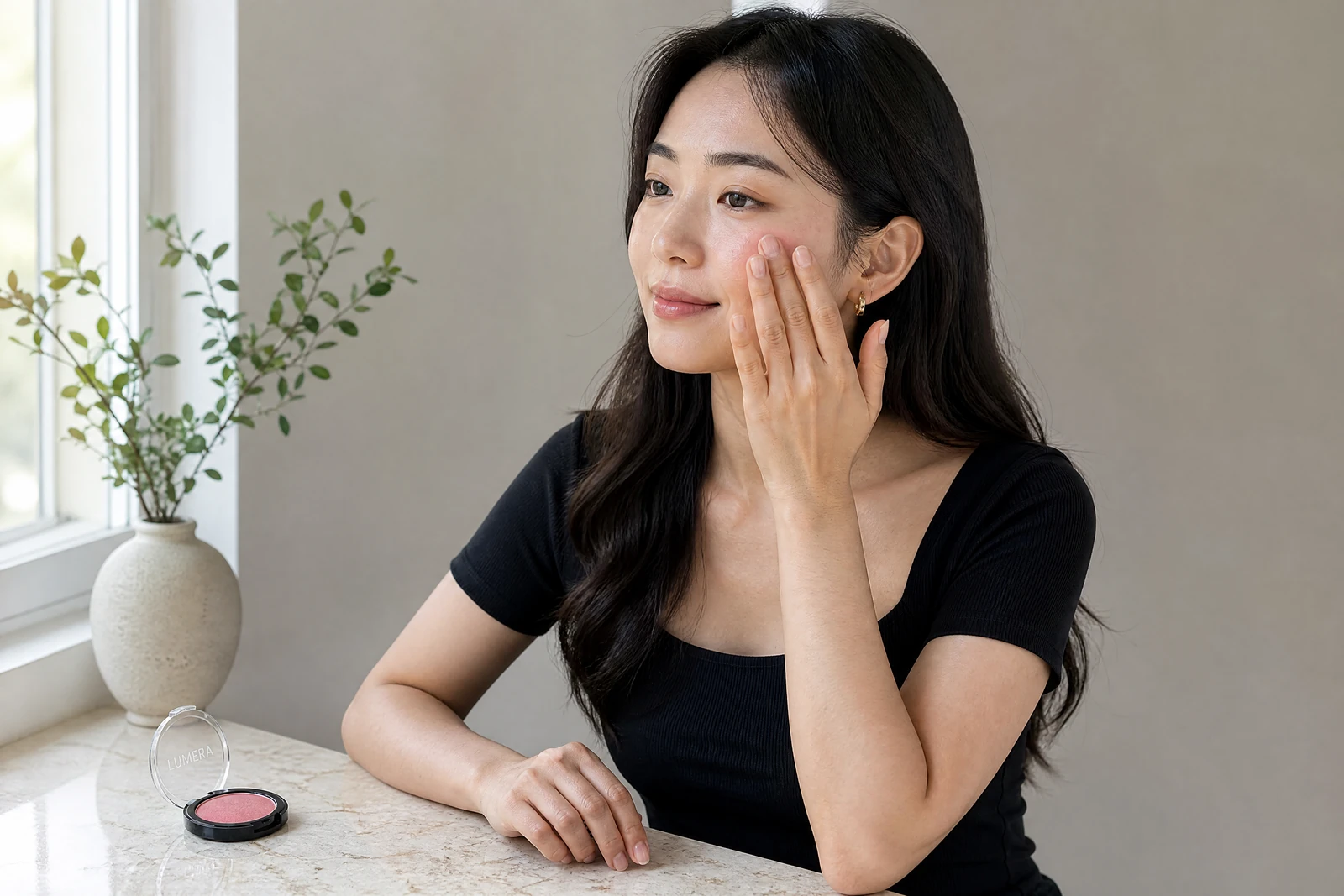
Blush works best when its texture suits the finish you enjoy and the way you normally apply makeup. A formula does not need to be expensive, unusually pigmented or difficult to layer to be useful. The right choice is often the one that lets you add a little color, then stop before the result starts to look separate from the rest of the face.
Start with the finish you want
Cream and liquid blushes tend to melt into a sheer base and can be easy to apply with a fingertip. They are helpful when you want the color to look close to skin rather than visibly powdered. Powder blush can be a comfortable choice when you prefer a soft-focus finish, want to work over a set base, or like to control intensity with a brush.
There is no universal rule that one texture is better for dry, oily or mature skin. A light hand, compatible base products and a finish you like matter more than a broad label. If a formula repeatedly stings or leaves the skin uncomfortable, stop using it.
Match the tool to the formula
A fingertip gives cream or liquid products a quick, diffuse edge. A dense brush can place more color precisely, while a fluffy brush makes powder easier to build gradually. Start with less than you think you need. It is easier to add one small layer than to correct a large patch of color after the rest of your makeup is finished.
Test it in an ordinary day
Try a new blush with your usual skincare, base and commute rather than deciding under bright retail lighting. Notice whether it remains comfortable, whether it moves with the products beneath it and whether you still like the color in daylight. Ingredient lists and labels are useful context for a product, but they cannot predict every individual reaction.
PRACTICAL NEXT STEP
Keep the technique proportionate
Color cosmetics are easier to enjoy when the product has one assignment. A small adjustment to coverage, color or hold often looks more intentional than trying to correct every detail at once.
Use this article to guide: cream blush, liquid blush, powder blush.
- Apply the thinnest useful layer, then step back before adding more.
- Check shade and texture in daylight as well as under indoor light.
- Clean tools regularly and stop using a product that repeatedly causes discomfort.
Before making a purchase or adding another step, decide what this change would replace. A smaller, clearer test is easier to evaluate than several new products used at once.
Revisit the decision after a few ordinary uses. Keep what is genuinely useful, simplify what is not, and let comfort and practicality carry more weight than a trend or a single swatch.
Keep the limit clear: A cosmetic can change a finish, not diagnose or treat a skin concern. Keep products out of the eyes and follow the label directions.
EXPLORE THE CONTEXT
Continue through the beauty archive.
Take the next useful route rather than treating one article as the end of the question.
Sources
- U.S. Food and Drug Administration - Cosmetics Labeling Guide
- U.S. Food and Drug Administration - Color Additives
Last reviewed Jan 24, 2025. This article is educational and does not replace medical advice.