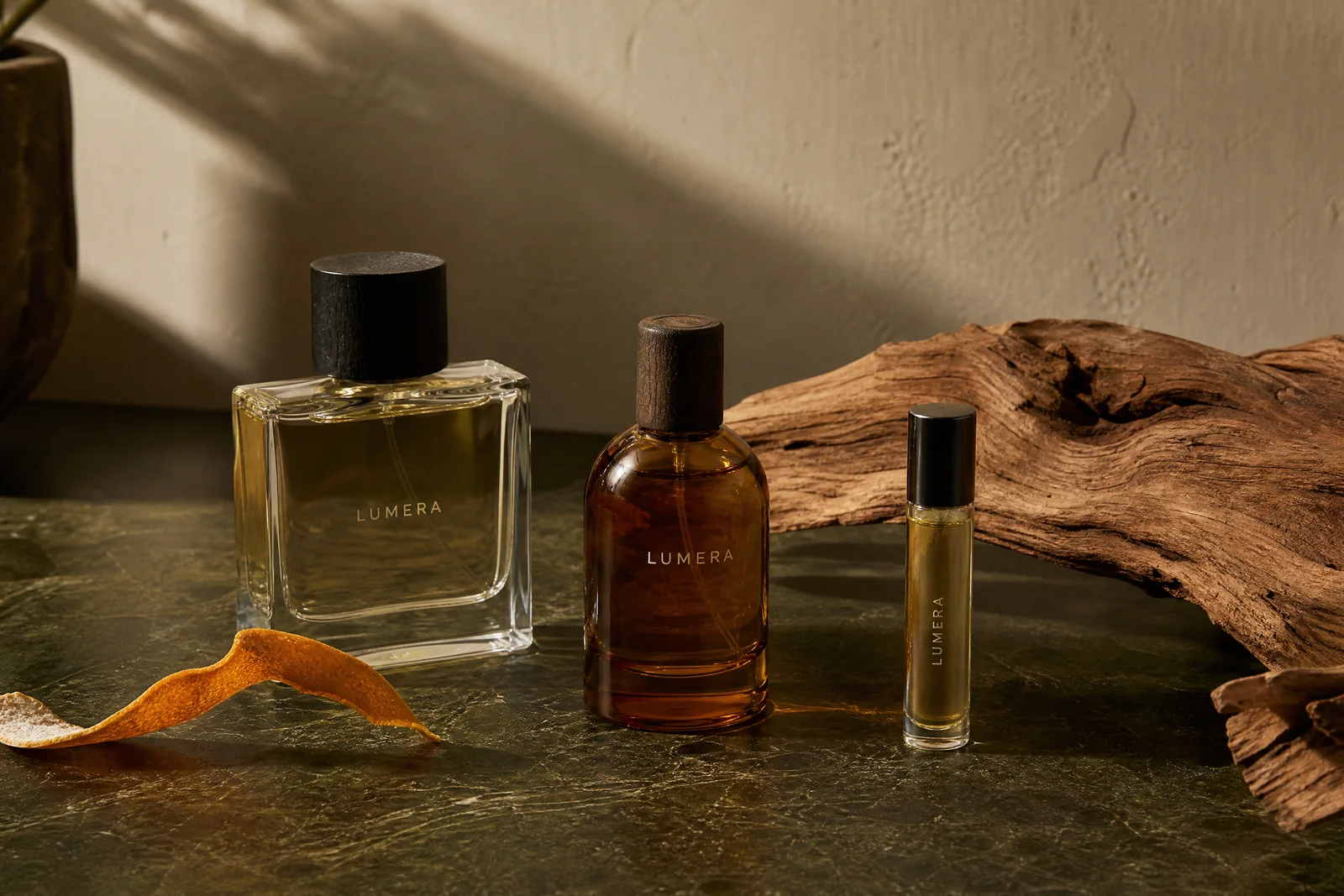
Fragrance labels can make the category seem more exact than it is. Eau de parfum, eau de toilette and cologne are common terms for different product styles, but they do not promise that a scent will last for one fixed number of hours on every person.
Think of concentration as a starting point
In broad terms, a perfume extract contains a higher proportion of fragrance materials than an eau de parfum, while an eau de toilette is often lighter. The formula, climate, fabric, application amount and individual perception all affect how the scent develops.
A lighter formula can be a better choice when you want a more airy experience. A richer formula can feel more present, but it may not suit every setting or every nose. Test the category that matches the atmosphere you want before assuming the strongest option is best.
Read the development, not just the first spray
The opening can shift quickly as alcohol evaporates and different materials become more noticeable. Try a scent on clean skin or a blotter, then return to it after a short walk or a quiet hour. Notice whether it feels close to the body, whether it grows louder and whether the dry-down still feels appealing.
If you are testing several fragrances, use separate blotters and take breaks. Scent fatigue is normal; smelling more products in a row does not necessarily make the comparison more accurate.
Keep comfort in the decision
Fragrance can be a pleasurable cosmetic choice, but it is optional. If a product irritates your skin, triggers discomfort or feels intrusive in shared spaces, stop using it or choose a different application method. Ingredient lists and labels are useful, especially for people who already know they react to particular materials.
PRACTICAL NEXT STEP
Wear fragrance in context
A fragrance is part of a shared environment as well as a personal preference. The best test is a light application on a normal day, with time to notice how it develops and how it feels on the skin.
Use this article to guide: eau de parfum, eau de toilette, fragrance oil.
- Start with one scent or one clear pairing instead of several competing products.
- Give the dry-down time before deciding whether a bottle suits you.
- Store bottles upright, capped and away from sustained heat and direct light.
Before making a purchase or adding another step, decide what this change would replace. A smaller, clearer test is easier to evaluate than several new products used at once.
Revisit the decision after a few ordinary uses. Keep what is genuinely useful, simplify what is not, and let comfort and practicality carry more weight than a trend or a single swatch.
Keep the limit clear: Do not apply fragrance over irritated skin. A lighter application is usually the more considerate choice in close or shared spaces.
EXPLORE THE CONTEXT
Continue through the beauty archive.
Take the next useful route rather than treating one article as the end of the question.
Sources
Last reviewed Jul 18, 2025. This article is educational and does not replace medical advice.